


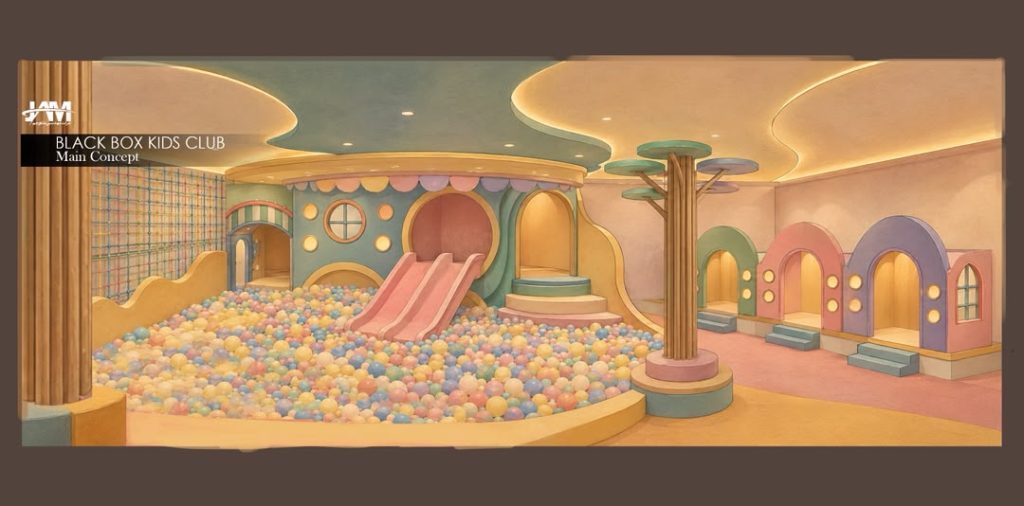
Funilla Kids Playhouse, iran Mall
Design and Implementation of Outdoor and Indoor Amusement Parks, kids playhouse, Themed Buildings, and Children’s Playhouses
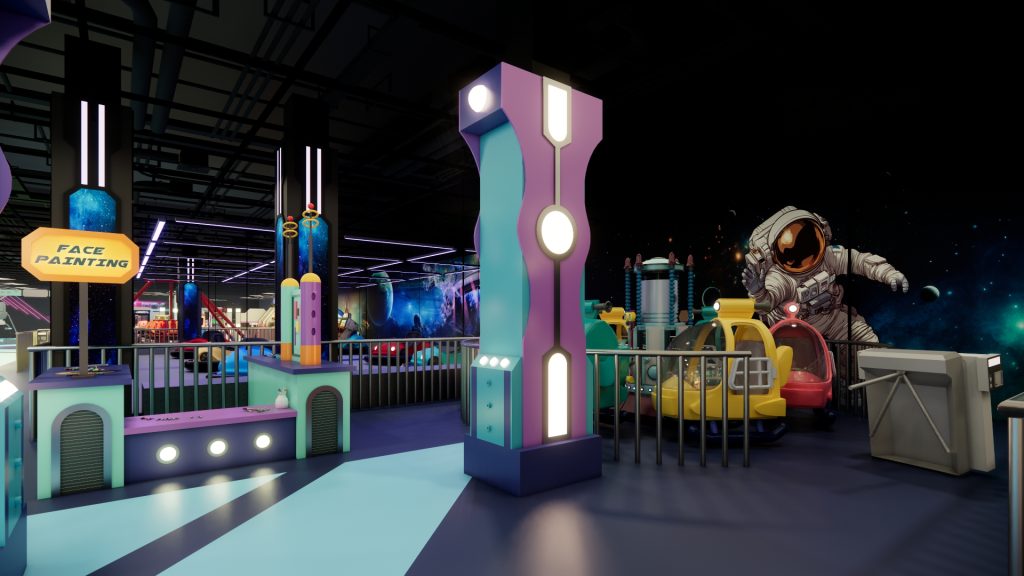
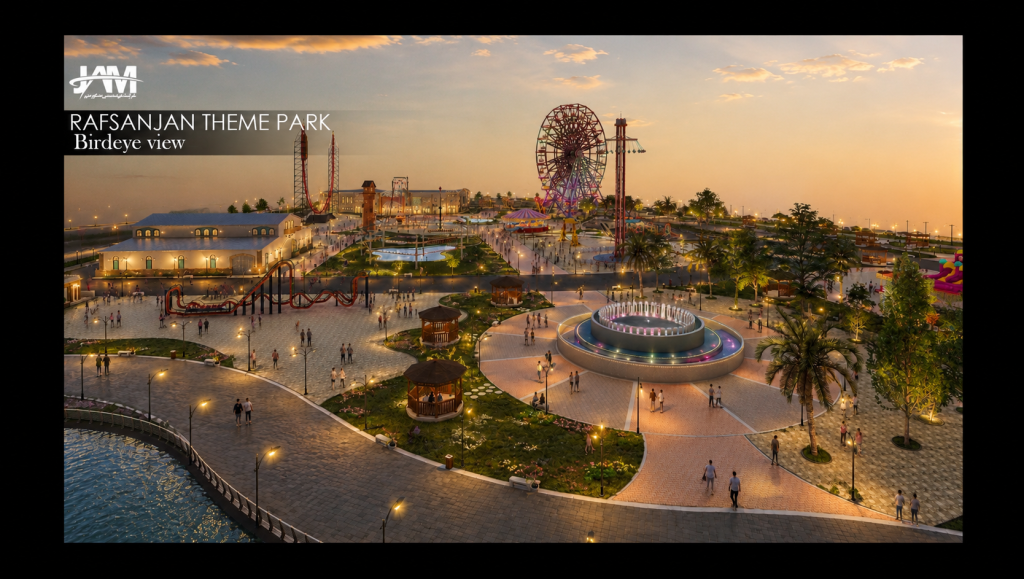
Every project at Jamco Design begins with a thorough understanding of the client’s objectives, an assessment of the site’s potential and characteristics, audience analysis, and the development of a clear project strategy. From concept development and thematic design to architectural design, space planning, preparation of executive documentation, and execution management, Jamco’s specialized team coordinates every stage of the project through one integrated process.
This approach ensures that all design, technical, and execution decisions remain fully coordinated from the initial concept through to operation. The result is the creation of entertainment and leisure destinations that combine a distinctive architectural identity and spatial experience with functional efficiency, safety, user appeal, and economic performance—fully aligned with the project’s investment objectives.
Every project at Jamco Design begins with understanding the client’s needs, analyzing the space, and defining the project objectives. The process then continues through ideation, concept development, architectural design, thematic design, preparation of executive documentation, and project execution as an integrated workflow. Finally, through project commissioning and operational consulting, we support our clients through to the successful launch of their entertainment destination.
In this section, we answer the most important questions about the design, planning, development, and operation of amusement parks, children’s play centers, FECs, and other entertainment destinations.
Professional amusement park design goes far beyond the visual design of the space or the selection of attractions and equipment. A successful project requires an integrated combination of initial studies, market analysis, concept development, master planning, architectural design, interior design, thematic design, equipment selection, construction documentation, and execution management.
At Jamco Design, entertainment projects are managed as an integrated process, from ideation and feasibility studies through design, construction, equipment installation, and commissioning. The goal is to create destinations that are not only visually engaging but also successful in terms of user experience, safety, functionality, and economic performance.
The design process for entertainment destinations typically begins with understanding the project objectives and analyzing the site conditions. At the initial stage, the available space, target audience, budget, revenue model, and client requirements are carefully evaluated.
This is followed by concept development, visual identity definition, user circulation planning, space and equipment layout, architectural design, and 3D visualization. In the final stages, construction documentation, technical coordination, project execution, and preparation for operation are completed.
A professional entertainment design should consider the user experience and the project’s economic success from the very beginning—not just its visual appearance.
Entertainment destinations are designed around user behavior and experience. In these projects, alongside fundamental architectural principles, factors such as spatial psychology, user circulation, activity selection, dwell time, safety, visual appeal, and the revenue model play an essential role.
For this reason, designing an amusement park or FEC requires expertise beyond conventional building design. It involves an integrated understanding of architecture, experience design, entertainment engineering, and the entertainment industry to create spaces that are both engaging and commercially successful.
A children’s play center typically focuses on play, learning, and children’s skill development, and is designed primarily for younger age groups.
An indoor amusement park generally includes entertainment attractions, skill-based games, and recreational activities designed for a wider range of age groups.
A Family Entertainment Center (FEC) is a comprehensive family-oriented destination that can combine a variety of experiences, such as arcade games, VR, bowling, children’s play areas, cafés, restaurants, birthday rooms, and interactive entertainment.
The right type of entertainment destination should be selected based on the project’s location, target audience, and investment objectives.
Yes. Many successful entertainment projects have been designed within limited spaces. In such projects, efficient space utilization, careful activity selection, effective user circulation, and creating a diverse range of experiences become even more important.
With the right design approach, even a small commercial space can be transformed into an engaging and economically viable entertainment destination.
The cost of an entertainment project depends on various factors, including the total area, type of destination, number and type of attractions and equipment, level of design, material quality, site conditions, scope of design services, and execution method.
For this reason, it is not possible to provide a fixed price for every project. In a professional process, initial studies and a detailed assessment of the project requirements are carried out first to determine the most suitable solution based on the client’s budget and investment objectives.
The success of an entertainment destination depends on more than attractive design. A successful project should be planned from the outset based on audience analysis, visitor capacity, the right mix of activities, user dwell time, maintenance costs, and a well-defined revenue model.
In professional entertainment design, every square meter should serve a clear purpose, creating a balance between an engaging user experience and the project’s economic efficiency.
Building a successful entertainment destination is not limited to purchasing equipment and creating an attractive space. Entertainment facilities are complex systems that must be designed simultaneously around user experience, spatial functionality, safety, visual appeal, and economic performance.
Specialized design makes it possible to make informed decisions before construction begins, including defining the right type of destination, identifying target audiences, determining spatial capacity, planning equipment layouts, organizing user circulation, selecting activities, and establishing an effective operating model. Without a well-planned design, projects may face issues such as inefficient use of space, lower user satisfaction, increased construction costs, and even reduced revenue.
A specialized entertainment design team brings expertise beyond architecture, including a deep understanding of user behavior, safety standards, the entertainment industry, User Experience (UX) design, and operational requirements. As a result, design becomes more than a stage of visual development; it becomes a strategic tool for reducing investment risk and increasing the overall success of the project.
At Jamco Design, every project begins with a detailed analysis of the client’s objectives, initial studies, concept development, and spatial planning, followed by the development of practical design solutions. The goal is to create entertainment destinations that deliver memorable experiences while also providing strong functional and economic value.


